The Complete Buyer’s Guide to Custom Teamwear: Fabrics, MOQ, Samples, Pricing & Production
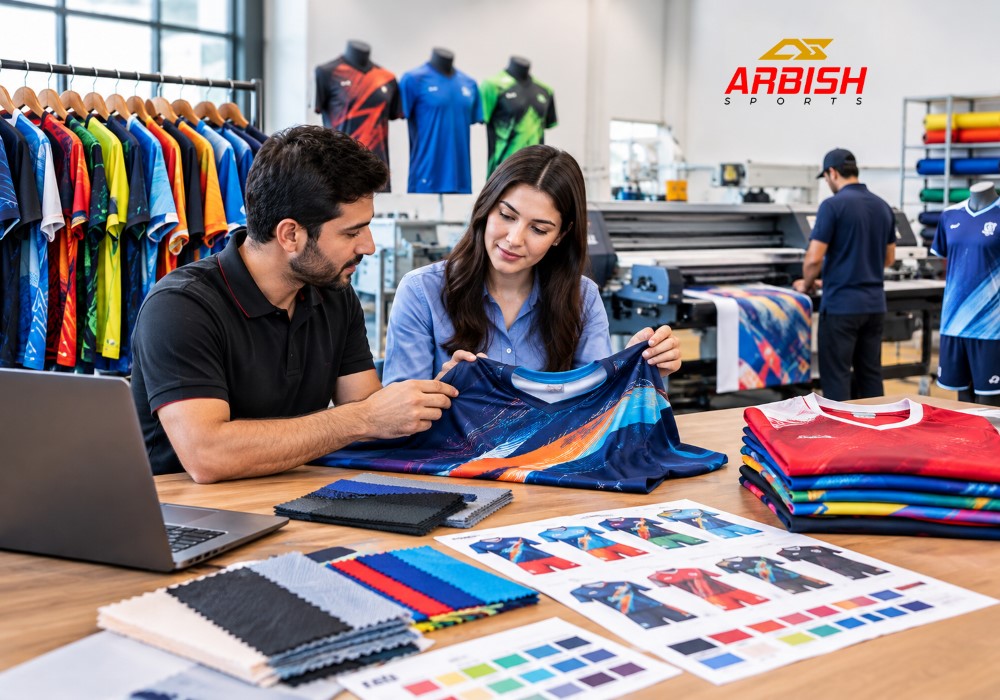
Buying custom teamwear in bulk is a business decision, not a shopping trip. Here’s what matters most before you sign a purchase order.
1. Lock In Your Manufacturer First
Everything else- your timeline, print options, and unit costs- depends on who makes your gear. Don’t waste time finalizing detailed designs until you know your manufacturer’s specific capabilities, cut-and-sew expertise, and equipment limits.
2. Prioritize Quality Control Over Sticker Price
A cheap quote means nothing if half the shipment has loose stitching, off-center logos, or uneven sizing. Before discussing pricing, ask manufacturers about their quality control (QC) procedures:
- Do they perform inline inspections during stitching?
- What are their acceptable quality limits (AQL)?
- How do they handle fabric shrinkage and color fastness testing?
3. Match the Right Fabric to Your Sport
Fabric selection directly impacts performance and comfort. Select your fabric based on GSM (Grams per Square Meter), weave, moisture-wicking properties, and climate suitability.
| Fabric Type | Optimal GSM Range | Best Suited For | Key Performance Traits |
| Mesh Polyester | 110–150 GSM | Basketball, intense heat sports | Extreme breathability, lightweight airflow |
| Micro Polyester | 120–160 GSM | Running, track & field | Ultra-lightweight, quick-drying |
| Birdseye Polyester | 130–160 GSM | Soccer, volleyball, training tees | High moisture-wicking, breathable pin-hole texture |
| Interlock Polyester | 130–170 GSM | General sportswear, team jerseys | Smooth surface, durable, anti-chafing |
| Performance / Dri-FIT | 130–170 GSM | All-around athletic apparel | Rapid sweat evaporation, soft hand-feel |
| Recycled Polyester | 130–180 GSM | Sustainable athletic wear | Eco-friendly (post-consumer plastic), durable |
| Honeycomb / Pique | 140–180 GSM | Golf polos, coaching staff wear | Structured texture, premium look, durable |
| Jacquard Polyester | 140–180 GSM | Premium match jerseys | Textured, custom-woven patterns, stylish |
| Polyester-Spandex | 160–220 GSM | Compression wear, leggings | 4-way stretch, form-fitting flexibility |
| Nylon-Spandex | 160–220 GSM | Yoga, gymnastics, high-flex sports | Premium buttery softness, high abrasion resistance |
| Cotton / Polyester Blend | 160–220 GSM | Warm-up gear, leisure sportswear | Soft feel with reduced shrinkage |
| 100% Cotton | 160–220 GSM | Casual lifestyle tees, benchwear | Natural breathability (Note: retains moisture) |
| Polyester Tricot | 180–250 GSM | Tracksuits, warm-up jackets | Smooth exterior, brushed interior, structural hold |
| French Terry | 220–300 GSM | Mid-weight hoodies, sweatpants | Loop-back interior, breathable warmth |
| Polyester Fleece | 240–320 GSM | Cold-weather outerwear, winter hoodies | Heavyweight thermal retention, soft insulation |
Pro Tip: Look for Azo-free dye certifications to ensure the fabrics are non-toxic, eco-safe, and won’t irritate sensitive skin during heavy sweating.
4. Choose the Correct Printing Technique
Mastering print methods before approving artwork prevents costly sample rejections:
- Sublimation: Dyes the fabric directly; zero weight, zero fading, unlimited colors. Best for 100% polyester sports jerseys.
- Direct-to-Film (DTF): Versatile, bright, and works on almost all fabrics (cotton, poly, blends).
- Direct-to-Garment (DTG): Ideal for complex, multi-color designs on 100% cotton casual wear.
- Silk Screen Printing: Highly cost-effective for large bulk orders with 1–3 solid colors.
- Puff Printing: Creates a raised 3D texture; great for streetwear logos and lifestyle accents.
- Vinyl Transfer: Perfect for individual player names and numbers.
5. Calculate True Landed Cost, Not Just Unit Price
The price per garment quoted by a factory is only part of the equation. To protect your budget, calculate your landed cost per unit:
6. Verify MOQs & Real Lead Times Early
- Minimum Order Quantity (MOQ): Ask about MOQs immediately. High MOQs can crush small clubs or startups before they begin.
- Lead Times: Sales emails often promise 2-week turnarounds, but real-world production includes fabric knitting/dyeing, print setups, transit, and customs clearing. Always buffer production schedules by 2-3 extra weeks.
7. Enforce a Clean Ordering Process
Never rely on verbal agreements or mockups sent over chat. Maintain a strict workflow:
- Create a Tech Pack: Include flat sketches, exact measurements, Pantone color codes, logo placements, and stitch types.
- Order a Physical Pre-Production Sample: Inspect the fabric hand-feel, fit, print accuracy, and stitching strength in person before approving full mass production.
This guide walks through each step in that order, so you can source custom team apparel with confidence and fewer surprises.
Why Custom Teamwear Sourcing Is Different From Regular Clothing Shopping
Buying 50 or 500 matching jerseys is not like buying a T-shirt online. You’re managing sizing charts, team colors, sponsor logos, player numbers, and delivery deadlines tied to a season schedule.
If the order arrives late, wrong, or falls apart after three washes, that’s not just annoying. It affects your team, your brand, and your budget.
This is why smart buyers, team managers, athletic directors, sportswear founders, and procurement officers treat teamwear sourcing like any other B2B purchase. They compare manufacturers, ask hard questions, and demand proof before paying in full.
Let’s break the process down step by step.
Step 1: Choosing the Right Manufacturer
What a Good Manufacturer Actually Offers
A strong custom sportswear manufacturer should give you more than a low price. Look for:
- In-house knitting, dyeing, cutting, sewing, and printing (fewer subcontractors, fewer mistakes)
- A real sample process before bulk production
- Clear communication in your time zone or working hours
- References or verifiable client history
- Willingness to share fabric specs and test reports
Questions to Ask Before You Commit
- Can you provide a physical pre-production sample, not just a digital mockup?
- What is your factory’s minimum order quantity?
- What printing and stitching methods do you use?
- Can you share GSM (fabric weight) options for this fabric type?
- What’s your average lead time for an order this size?
Manufacturer Comparison Snapshot
| Factor | Small Local Print Shop | Overseas Bulk Factory | Specialized Teamwear Manufacturer |
|---|---|---|---|
| MOQ | Very low (1–10) | High (500+) | Moderate (10–50) |
| Fabric options | Limited | Wide but variable quality | Sport-specific, tested |
| Sample process | Fast, sometimes skipped | Slow, often delayed | Standard, structured |
| Custom printing | Basic vinyl/heat press | Full sublimation | Full sublimation + embroidery |
| Lead time | Days to 1–2 weeks | 6–10 weeks | 3–6 weeks |
| Best for | One-off events | Large national brands | Clubs, schools, small-to-mid brands |
A specialized teamwear manufacturer like Arbish Sports usually sits in the sweet spot for clubs and growing sportswear brands: fast enough turnaround, real fabric testing, and MOQs that don’t force you to overbuy.
Step 2: Quality Control, Don’t Skip This Step
Why Quality Checks Come Before Price
A cheap jersey that fades after five washes costs more in the long run than a slightly pricier one that lasts three seasons. Quality problems show up in three places: fabric, stitching, and print.
What to Check at Each Production Stage
- Raw fabric inspection: checking GSM weight, stretch, and color consistency; width of fabric color matching with Pantone shades, wrinkles, NT STATIC Process
- Cut and sew inspection: checking seams, stitching tension, and size accuracy
- Print and finish inspection: checking sublimation ink bleed, color matching, and logo placement
- Pre-shipment inspection: a final random sample check before the whole order ships
Common Quality Problems to Watch For
- Colors that look different in real life versus the digital proof
- Loose stitching around the collar or sleeve seams
- Sizing that doesn’t match the size chart you approved
- Printed numbers or logos that crack or peel after a few washes
Ask your manufacturer directly: “What is your defect rate, and how do you handle it?” A serious manufacturer will have a clear answer, not a vague one.
Step 3: Understanding Custom Performance Fabrics
Why Fabric Choice Matters More Than Design
The design gets the attention, but the fabric decides how the jersey performs on game day. Wrong fabric choice means sweaty, itchy, uncomfortable players, no matter how good the logo looks.
Key Fabric Terms Every Buyer Should Know
GSM (Grams per Square Meter)
This measures fabric weight. Lower GSM (130–160) is lighter and better for hot climates and high-intensity sports like soccer or basketball. Higher GSM (180–220) is thicker and often used for outerwear, rugby, or cold-weather kits.
Moisture-Wicking Synthetic Fabrics
These pull sweat away from the skin to the fabric surface, where it evaporates faster. Polyester blends are the standard choice for athletic wear because they wick moisture better than cotton.
Anti-Odor Treatment
Some performance fabrics are treated to resist bacterial growth, which causes bad smells. This matters a lot for teams that wash gear less often, like club-level or youth sports programs.
Recycled Polyester (rPET)
rPET fabric is made from recycled plastic bottles and other waste. It performs almost identically to virgin polyester but appeals to brands and clubs that care about sustainability messaging.
Fabric Comparison Table
| Fabric Type | Best For | Weight (GSM) | Moisture-Wicking | Sustainability |
|---|---|---|---|---|
| Standard Polyester | General teamwear | 140–180 | Good | Low |
| rPET Recycled Polyester | Eco-conscious brands | 140–180 | Good | High |
| Polyester-Spandex Blend | Compression wear, cycling | 180–220 | Very Good | Medium |
| Mesh Panel Polyester | High-heat sports | 100–140 | Excellent | Medium |
Quick Tip for Buyers
If your team plays outdoors in hot weather, ask for mesh panel inserts under the arms and back. It’s a small detail that makes a big comfort difference.
Step 4: Printing Methods, Sublimation vs. Other Options
Why Sublimation Printing Is the Teamwear Standard
Sublimation printing works by turning ink into gas and bonding it directly into the fabric fibers. The result is a print that doesn’t crack, peel, or fade, because it’s part of the fabric, not sitting on top of it.
This makes sublimation printing teamwear the go-to choice for full-color jerseys with sponsor logos, player names, numbers, and patterns.
Printing Method Comparison
| Method | Durability | Best Use Case | Cost per Unit |
|---|---|---|---|
| Sublimation | Excellent, doesn’t crack | Full jerseys, all-over designs | Moderate |
| Screen Printing | Good | Simple logos, small orders | Low |
| Heat Transfer Vinyl | Fair | Player numbers, small runs | Low |
| Embroidery | Excellent | Logos, team crests, badges | Higher |
When to Combine Methods
Many teams use sublimation for the base jersey design and embroidery for the team crest or sponsor logo. This gives a premium, layered look that holds up over multiple seasons.
Step 5: Understanding Real Cost Per Unit
It’s Never Just the Sticker Price
Bulk jersey unit economics involve more than the quoted price per piece. Buyers need to factor in:
- Base garment cost
- Printing or embroidery cost per design element
- Setup fees for first-time designs
- Shipping and import duties (for overseas orders)
- Sample costs (sometimes free, sometimes charged)
- Rework or reprint costs if errors happen
Example Cost Breakdown (Per Jersey, Bulk Order of 100)
| Cost Element | Approximate Range |
|---|---|
| Base jersey (fabric + construction) | $6-7 |
| Sublimation printing (full design) | $2-3 |
| Player names/numbers | $1 |
| Shipping (per unit, bulk) | $0.50-1 |
| Estimated total per jersey | $9.50 – $12 |
Prices vary by fabric quality, design complexity, and order size. Always ask for a line-item quote, not just one bulk number. This helps you compare manufacturers fairly.
Negotiation Tip
Larger orders almost always bring the per-unit price down. If you’re close to a price break at the next quantity tier, ask the manufacturer directly. Many will work with you.
Step 6: Minimum Order Quantity (MOQ), What Buyers Need to Know
Why MOQ Exists
Manufacturers set a teamwear minimum order quantity because setup costs (cutting patterns, print screens, sublimation setup) are the same whether you order 10 jerseys or 200. Lower MOQs usually mean higher per-unit prices.
Typical MOQ Ranges by Manufacturer Type
- Small print shops: 1–10 units
- Specialized teamwear manufacturers: 10–50 units
- Large overseas factories: 300–1,000+ units
How to Handle a High MOQ as a Small Buyer
- Ask if you can combine multiple designs into one MOQ (common for clubs with several age groups)
- Ask about a “starter tier” pricing option for first-time buyers
- Check if the manufacturer offers reorder flexibility, so you don’t have to guess your full-season quantity upfront
A manufacturer with a reasonable, clearly stated MOQ, instead of a vague “it depends,” is usually more transparent across the board.
Step 7: Lead Times, Planning Around Real Production Schedules
What “Lead Time” Actually Includes
Teamwear lead times cover the full timeline: sample approval, fabric sourcing, cutting and sewing, printing, quality checks, and shipping. It’s not just “how fast can you sew it.”
Average Lead Time Ranges
| Order Stage | Typical Time |
|---|---|
| Design proof & approval | 2 – 5 days |
| Sample production | 5 – 10 days |
| Sample shipping & approval | 5 – 10 days |
| Bulk production | 15 – 30 days |
| Bulk shipping (domestic) | 3 – 7 days |
| Bulk shipping (international) | 15 – 30 days |
Planning Backward From Your Season Start Date
Count backward from the day you need jerseys in hand. Add buffer time for at least one round of sample revisions. Most sourcing delays happen because buyers start the process too close to the season, not because of manufacturer mistakes.
Rule of thumb: Start the ordering process at least 8–12 weeks before you need the finished product, especially for first-time orders with a new manufacturer.
Step 8: The Ordering Process, Step by Step
1. Prepare a Tech Pack
Apparel tech pack requirements include garment measurements, color codes (Pantone or HEX), fabric specs, print placement, and size grading. A clear tech pack prevents miscommunication and cuts down on revision rounds.
2. Request a Digital Proof
Before any fabric is cut, ask for a digital mockup showing colors, logo placement, and sizing layout.
3. Approve a Pre-Production Sample
This is the most important step in the entire process. Pre-production sample approval means you physically inspect fabric feel, stitching quality, fit, and print accuracy before committing to bulk production.
Never skip this step, even under time pressure. A rushed approval is the number one cause of bulk order disputes.
4. Confirm the Full Order
Once the sample passes inspection, confirm quantities, sizes, and final delivery address in writing.
5. Track Production and Quality Checks
Ask for photo or video updates during bulk production, especially for first-time orders.
6. Receive, Inspect, and Distribute
When the shipment arrives, spot-check a sample of units against the approved sample before distributing to the full team.
Custom Teamwear Sourcing Roadmap
Eight steps every buyer should follow, from picking a manufacturer to placing the final order — guide by Arbish Sports.
The 8-step buying process
Follow this order to avoid the most common (and most expensive) sourcing mistakes.
Manufacturer
Check for real samples, in-house production and a clear MOQ.
Quality
Fabric, stitching and print are checked before bulk ships.
Fabric
Pick GSM weight and moisture-wicking polyester or rPET.
Printing
Sublimation bonds ink into the fibers — it won’t crack or peel.
Cost
Get a line-item quote, not just one bulk number.
MOQ
Ask if smaller clubs can combine designs to hit the minimum.
Lead Time
Start 8–12 weeks before your season begins.
Ordering
Tech pack, then sample approval, then bulk production.
Ready to Kit Out Your Team?
Get tested performance fabrics, real pre-production samples and fair MOQs from Arbish Sports.
Explore High-Performance SportswearCommon Mistakes Buyers Make (And How to Avoid Them)
- Skipping the sample stage to save time, this almost always costs more later.
- Choosing fabric based on a picture alone; always ask for a fabric swatch.
- Ignoring MOQ terms until after placing a deposit.
- Underestimating lead time, especially around holiday seasons.
- Not getting a written tech pack, which leads to sizing and color disputes.
FAQ: Custom Teamwear Buying Questions
Q: What is a good MOQ for a small sports club?
Most specialized teamwear manufacturers offer MOQs between 10 and 50 units, which fits most clubs and school teams.
Q: How long before the season should I place my order?
Start at least 8 to 12 weeks before your season begins, especially if it’s your first order with a new manufacturer.
Q: Is sublimation printing better than screen printing for jerseys?
For full-color jerseys with names, numbers, and detailed graphics, sublimation lasts longer and won’t crack or peel. Screen printing works fine for simple, low-color logos on smaller orders.
Q: What’s the difference between recycled polyester and regular polyester?
Performance is nearly identical. rPET is made from recycled materials, which appeals to brands focused on sustainability, without sacrificing durability or moisture-wicking ability.
Q: Do I really need a sample before bulk ordering?
Yes. A pre-production sample is the only way to check fabric, fit, and print quality before committing to a full production run.
Q: What GSM weight is best for youth soccer jerseys?
Lighter weights, around 140–160 GSM, work well for high-movement, warm-weather sports like youth soccer.
Final Checklist Before You Place a Bulk Order
- Manufacturer references checked
- Fabric swatch and GSM confirmed
- Printing method matches design complexity
- Full cost breakdown received in writing
- MOQ confirmed and fits your budget
- Lead time matches your season timeline
- Tech pack completed and approved
- Pre-production sample physically inspected
Ready to Kit Out Your Team?
Sourcing custom teamwear doesn’t have to be stressful. With the right manufacturer, transparent fabric options, and a clear sample-approval process, you can outfit your entire team with gear that looks sharp and holds up all season long.
Arbish Sports specializes in exactly this kind of buyer-friendly process, clear MOQs, tested performance fabrics, and full sublimation printing built for teams, clubs, and growing sportswear brands. Whether you’re outfitting a school team or launching your own athletic brand, Arbish Sports can walk you through fabric selection, sampling, and bulk pricing without the guesswork.
Ready to launch your custom teamwear line or kit out your club?
👉 For the quickest response, contact our expert team now!